On The Road
A couple of cars ago, the family drove West … such a wide
country, such wonderful vistas along the way. It was a great trip, but
the drive back was something else again. I’ve thought of that drive
often and finally wrote about it. Now a wonderfully handsome and
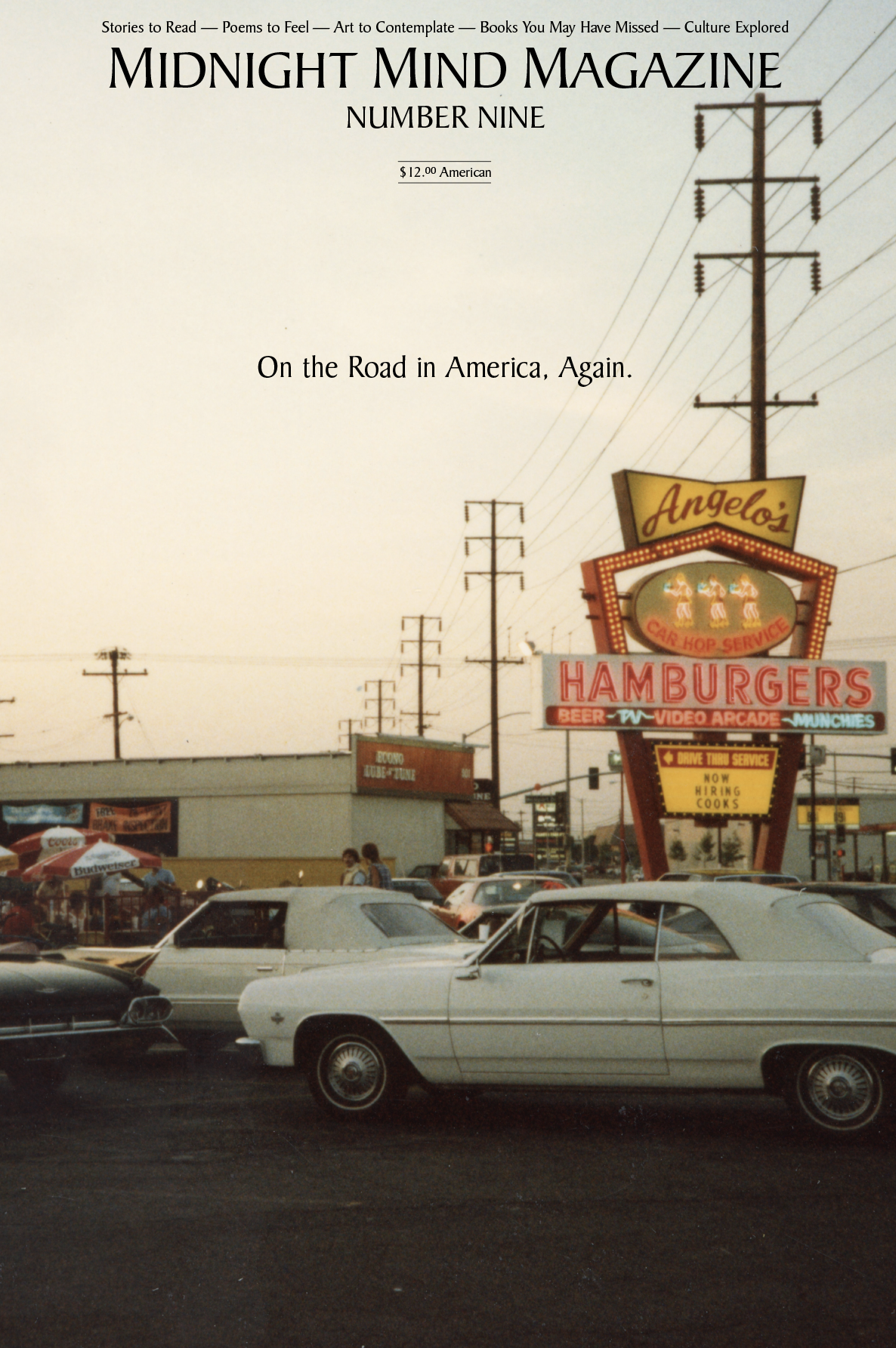
impressive print journal called Midnight Mind published my poem
“Flatland” in a section called “An Open Road Poetry Mix Tape (14 poems
to recite on the open road.” You’d need to take a long drive to recite
them all, but here’s mine.
Flatland
Spikes of lightning speared the earth
as thunderstorms moved on the mountains.
A tarantula cast a crook-leg shadow
on the road ahead. Baked under a blazing
sun and beguiled by the thorny plants
that stood in for the trees of home
we went on to Santa Fe with its picture
postcard pueblos and up to Colorado ski
country, then turned the Chevy East for home.
But Kansas. Kansas stopped us
with its mile on mile of featureless
flatness. Not a tree or house in sight
the horizon so wide you could
almost see earth’s curve out there.
I felt something at my back
and thought of the pioneer wives
running mad from wind and isolation
not born to it like Kiowa and Comanche.
At the next intersection we turned right
trusting the road south to take us
back to high country.
Many thanks to editor Brett Van Emst for including my poem in this special section.
....................................................................................................................................
A New Venture
Some months ago, I wrote about my friend Richard Eric Johnson and
included “The Hurricane’s Eye,” one of his poems published in Vietnam
War Poetry, an impressive online archive established
by Paul
Hellweg “to foster greater understanding of the
Vietnam War
and its impact on America, Vietnam, the veterans of both sides, and all
people involved either directly or indirectly.” Since then, Eric
suggested I apply to serve as poetry editor for that site.
It never occurred to me to seek such a position … and I have no real
knowledge of the Vietnam War or indeed, any military action. But here I
am, VWP poetry editor. And I’ve even taken on editing a chapbook by a
friend of the site’s founder.
I am moved indeed by these veteran’s poems. Perhaps you’d like to take
a look at some of them yourself. Check out the many contributing poets
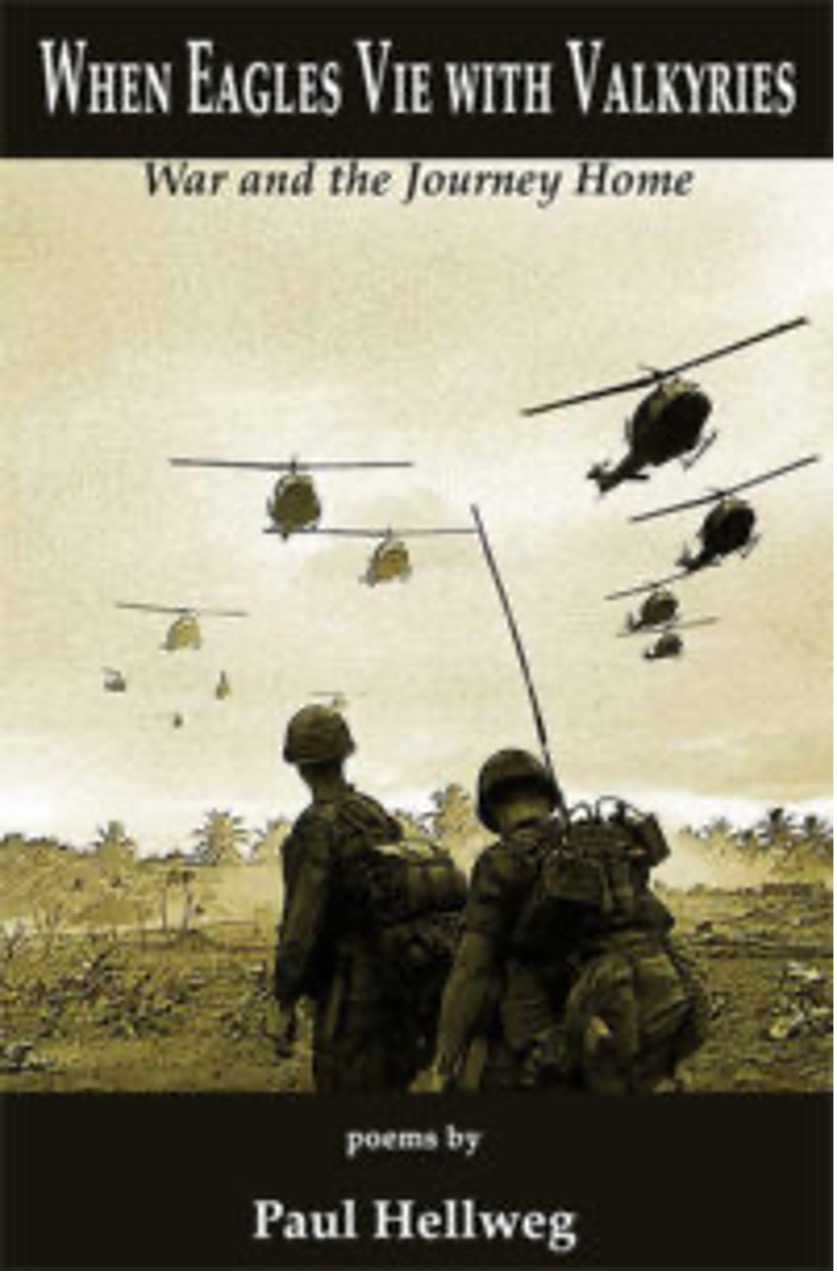
on VWP. And here’s the opening of “Ghosts,” from Hellweg’s When Eagles
Fly with Valkyries, which was nominated for the National Book
Award:
The dead from that war so long ago
continue to haunt.
You wish it were possible to speak with them,
but you know not what language,
English, Vietnamese, French, or perchance
ghosts speak in tongues not understood by the living,
boughs whispering in breeze,
wind wolves sighing through grasslands,
call of redtail hawk. . . more
....................................................................................................................................
Thankful for Poetry and Friends
I firmly believe that poets
shouldnt work alone. Ive just come from a
zoom session with my good friend the poet and author Jackie
Jules.
She and I regularly read and critique each others poems. I wouldnt
submit anything for publication until she and another poet friend, Richard
Eric Johnson,
have given it the okay. I also depend on appraisal and criticism from a
small group of poets I meet with each month. What would I do without
their help and suggestions?
And I wouldnt work
without reading plenty of poems by others. A writing teacher once told
me you should read 100 poems for every one you write. Thats why Im
delighted that two new books have recently come my way. Different
authors, different styles, different subjects, but both strikingly
fine.
In Invited
to the Feast by Bonnie Naradzay,
we learn about the authors journey as writer, teacher, and volunteer
leading poetry sessions in prisons and church groups. The first section
of Naradzays three-part book begins with poems about teaching poetry in
an inner-city shelter. In Bedes Sparrow for example, she recalls Carl,
who sleeps / near the M Street Bridge and who likes how the shadows /
of birds wings pass over his heart. The poem ends I have lifted my eyes
/ to the rafters and seen Bedes sparrow pass through / the church
basement and vanish into the dark.
Naradzays poems are, as one reviewer
says, filled with good conscience and abundant soul. I believe youll
also find them empathetic, imagistic, and above all moving.
Another recent book is Babbage's
Dream by Neil Aitken,
the poetic account of the 19th century polymath Charles
Babbage,
who came up with the concept of a digital programmable computer.
Strange subject for poetry? Not at all. Aitkens lyrical poems, in the
apt words of one reviewer, sing songs of creation, vision, possibility,
futurity. For example:
Array
this dark finery of words,
blackbird dress, woven labor of thought
the legless man in the mechanical Turk
the million monkeys at their machines
what midnight lines we have strung together
out of a strange script, overwritten with zeroes and ones
numbered in our cubicles, in our spaces, countered
our hands spread out like an arrangement of dimes
the coincidence of faces, the discarded signs rising and falling,
the slow working lungs of the binary sea
the program is a careful cathedral, an intersection of lines
the unknown body of the world, our communion, our heap
formed of pattern, code, the burst of light
here is a history of failures, each no more than the shape of itself
the logos we wear, the names we've forgotten
the ash and maple growing a leaf at a time, ordered simplicity
Paris filmed at night could be here, could be Alphaville,
could be wherever night blooms from the bare-limbed trees
someone wears a bright necklace of numbers, a ring of iron,
a long starry dress, heels that might break the world
Aitkens
stunning images spark both memory and imagination, teaching us
something about history and the possible future. Great stuff.
....................................................................................................................................
Thankful for Fragrance
Not
long ago, I was surprised to hear from a man in India who wanted to use
a poem of mine on something called a reed diffuser. Once I found out
what that was, I was intrigued. Rochak Agarwal, founder and proprietor
of Urban Ganges,
has produced some two dozen poetry reed
diffusers that feature complete poems on their labels.
Who knew? Ive been published in journals and books, in print or online,
but this was something new. And I liked the poem he chose: Between Sea
and Sky, published in October 2024 by Sunlight
Press. And sure enough, the reed diffuser with my poem is now
available, complete with a sandalwood-rose fragrance. You can find it here.
Between Sea and Sky
Usually the one you are looking for
lives next door.Franz Kafka
I live between sea and sky.
Earth, rocks, trees--I know the land
and cherish it, but ocean and space
are strangers to me.
I long to explore the great expanse--
from the far reaches of the cosmos
to the crushing depths of the deep.
But I let science do the searching,
sending a telescope deeper into space
and further back in time than ever
before, diving to find Stone Age relics
on the floor of the Baltic Sea.
Each day, new discoveries.
Meanwhile I take my pleasure
on a slender strip of land somewhere
between sea and sky.
We search, they say, for what is already
within our grasp. For ourselves,
perhaps, or for the great machine
that keeps it all running.
Many thanks, Mr. Agarwal.
....................................................................................................................................
Considering Tomorrow
In a time of discord and
division, what lies ahead? Thats the question behind America's
Future, an anthology of poetry and prose from the Washington
Writers' Publishing House that speaks to joy and resilience
amidst [todays] political turmoil, according to a review in Poets
& Writers.
The volume opens with remarks by U.S. Representative Jamie
Raskin
from an April rally on the National Mall. If theres no struggle, he
says, quoting Frederick Douglass, theres no progress. And the struggle
may be physical, it may be moral--it may be moral and physical--but
there must be struggle. Power concedes nothing without a demand.
A collaboration between E.
Ethelbert Miller and Miho Kinnas is the first poem in the
book:
To Write Is to Flower
We use the dictionary to cut
the stems of our poems.
Inside the vase they blossom
paying attention to prepositions.
At night petals fall like adjectives.
A stanza begins to reminisce about the past.
Elders spoke of a time
when people cut flowers
with their tongues
It is a time to remember the milky
liquid that leaked from the stalks.
The future sticks to our fingers
calling us to write and to flower.
A total of 164 writers
contributed to America's
Future, offering a breadth of responses from joy to sorrow,
from despair to rage. A sobering but inspiring read.
...................................................................................................................................
Looking Up
No matter what you think about
the future, the nations capital is a good place for poetry. Not only is
the Washington
Writers' Publishing House the longest, continuously operating
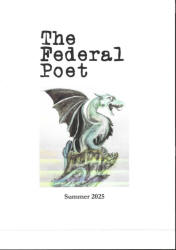
nonprofit literary small press in the U.S., but the Federal
Poets
is the oldest continuously active poetry group in the Washington D.C.
area. And you dont have to be a federal worker to belong. The Federal
Poet is published twice a year, and I was lucky enough to be included
in the Summer 2025 edition (thanks, Jonathan Lewis).
Cosmology 101
The Story of Our Universe May Be Starting
to Unravel New York Times, 9/3/23
Just when we believe we understand
how things work, theres something new
something else to scrutinize
something that keeps us growin
And now the wondrous Webb telescope
is challenging our view of it all
Look at me, says a very distant galaxy,
Im older by far than you can imagine
Look how quickly I formed, says the galaxy,
much earlier than you can contemplate
Time to rethink what you think you know
This is the universe calling, reminding us
theres always more to learn
....................................................................................................................................
Vietnam Archive
A
defining event in the life of most people my age was the Vietnam War.
Whether you fought or marched, it was a crucial time in our lives and
in the history of the United States. As the Poetry Foundation writes,
By the time United States troops withdrew from Vietnam in 1973, the
Vietnam War had become one of the longest, most controversial conflicts
in American history. The conflict marked a turning point for how
Americans saw the militarys place in the world. After being met with
years of protest, demonstrations, and activism the Vietnam War remains
a cultural milestone in citizen involvement.
My friend Richard
Eric Johnson has written powerful poems about his time in
Vietnam. His work is archived in LaSalle Universitys
Connnelly Library
and online in Vietnam War Poetry,
an impressive archive established by Paul
Hellweg
to foster greater understanding of the Vietnam War and its impact on
America, Vietnam, the veterans of both sides, and all people involved
either directly or indirectly. Heres one of Erics poems from that
collection:
The Hurricane's Eye
Richard Eric Johnson
out of the blue
white puffy clouds
ever higher
the towering
lightning filled
black night
heart shaking
storm
no way around
above or beneath
into the eye
of I
and we
courage calling
courage needed
courage in question
through the eye
past perimeters
of storm
we flew
into the aftermath
war zone
the hurricanes eye
a singular moment
tranquility remembered
Eric
has compiled a stunning manuscript of poems about the war and its
aftermath in his life, a manuscript I expect will soon be snapped up by
a savvy publisher.
....................................................................................................................................
Matters of the Heart
Well, its still beating and now
that Im well into my 80s, I have to pay
attention to such routine matters. So do the doctors, who gave me a
variety of tests last year before I went through a minor surgery. One
of the tests is the subject of this poem, which was published in Grey
Matter: An Anthology of Contemporary Medical Poems the by University of
Arizona College of Medicine in Phoenix.
Nuclear Test
Sally Zakariya
I thought it meant exploding a bomb
in some far distant corner of the earth.
But for this old body it means
injecting a noxious liquid
then watching through a whirring,
rumbling machine to see how
my newly stressed heart behaves.
Normal, they say.
But whats normal about stockpiling
horror and threatening war?
Whats normal about wielding dread
and the fear of fallout?
In this hospital, this microcosm
of the globe, peace reigns--for now.
Thank you, Grey
Matter. Im delighted to be in your first print anthology.
....................................................................................................................................
Poetry versus Verse
Yes,
its National
Poetry Month, a yearly celebration of poetry organized by the
Academy
of American Poets to increase awareness and appreciation of
poetry in the United States. But just in case we missed it, World
Poetry Day, declared by UNESCO in 1999, alerted us on March
21 that Poetry Month was just around the corner.
And here we are. While were celebrating poets and poetry, we might want
to give a bit of thought to poetrys little cousin, verse.
They dont call it Verse Month, do they? Ever wonder why? Ever wonder
whats the difference between poetry and verse?
John
Barr, who served as the first president of the Poetry
Foundation,
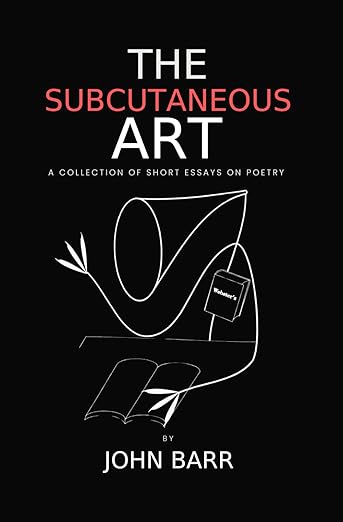
addressed that question in The Subcutaneous Art: A Collection of Short
Essays on Poetry. Verse, I have come to think, is poetry written in
pursuit of limited objectives, by which he means telling a joke or tall
tale or demonstrating the inherent pleasures of meter and rhyme.
Verse is not great art, nor is it trying to be, he says. It is not an
instrument of exploration, but rather a tool of affirmation. A poem,
according to Barr, begins in delight, and ends in wisdom. Verse, on the
other hand, begins in delight and ends in more delight.
....................................................................................................................................
June / Tune / Moon
Like most people who try to
write poetry, Ive written more than a bit
of verse (including limericks for friends birthdays). And when it comes
to the moon, that infinitely rhymable word, its easy to write verse.
But not long ago, I tried to write a poem about our faithful companion
in the sky, and Jim Lewis, editor of the great Verse-Virtual,
was kind enough to print it, plus a second poem, in January.
Lunar Lullaby
Sally Zakariya
Oh little sister in the sky,
formed of the same cosmic cloud
of debris, circling big brother,
pulling the tides, waxing and
waning.
Oh faithful follower,
teller of time, ruler of seasons,
mirror of Earths light.
Shine down on our dreams
and soothe our sleep.
You who washed a walking fish
ashore to evolve into a different
being, help us grow into wiser
and kinder beings.
Oh symbol of Goddess Artemis,
destination of Apollo missions,
tell us a bedtime story.
Tell us the why the Man in the Moon
is mourning, why the craters are crying,
but tell us it all ends well.
Read this and Close to
Nothingness here.
....................................................................................................................................
Sonnet Challenge
Whoever
came up with the sonnet? I know, I know, its a well-loved poetic form.
But the sonnet is a real challenge for free-verse poets like me. Im
taking a Zoom class on love poetry with the mighty Mike
Maggio, and one of the first poems we read was Shakespeares Shall
I Compare Thee to a Summer's Day.
You know, fourteen lines, rhyme scheme abab cdcd efef gg with a turn
after line eight and a rhymed couplet at the end. No big deal, right?
Well, maybe no big deal for Shakespeare, Petrarch, and the like. Or not
even for Howard
Moss, who amazingly has written a batch of Shakespeare
Sonnets for Modern Reading. His take on Summers Day begins:
Who says youre like one of the
dog days?
Youre nicer. And better.
It
ends After youre dead and gone, / In this poem youll live on. Bravo,
Mr. Moss!
Well, clever me, I said trying to rewrite a Shakespeare sonnet in
modern terms would be quite a challenge. And guess what the weeks
assignment was?
I wont insult you with my efforts, but I do recommend giving it a try.
Its a challenging workout that will really exercise your poetry
muscles.
....................................................................................................................................
Speaking of Love Poems
Even though my husband and I
have been married a full half-century, I still write poems for him. And
the excellent Remington
Review was kind enough to publish one of them in its Winter
2025 issue. (By the way, my husband, Mohamed Zakariya,
is a calligrapher who reads and writes in Arabic and Turkish, hence the
first line.)